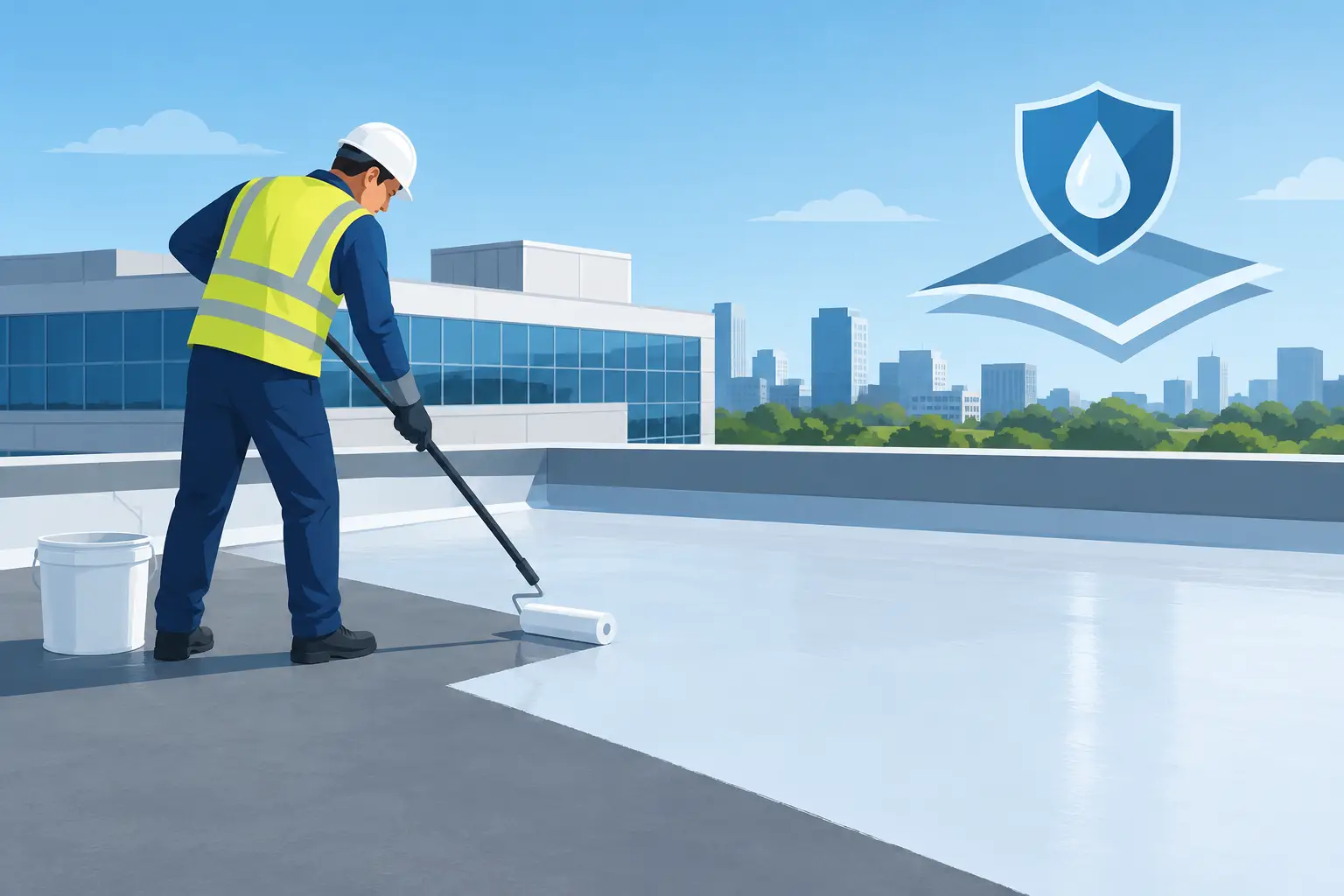
A commercial roof rarely fails without warning. A stained ceiling, blistered internal finish or persistent damp smell may appear minor, yet each can indicate water travelling beneath the roof covering and into the building fabric. Effective commercial roof waterproofing is therefore not simply a coating applied after a leak. It is a considered system of inspection, material selection, precise detailing and ongoing maintenance designed to protect the property over the long term.
For commercial property owners, landlords and facilities managers, the stakes are clear. Water ingress can interrupt operations, damage stock and equipment, affect tenants, and lead to expensive structural repairs if it is allowed to persist. The right roofing work protects both the building and the business within it.
Why commercial roof waterproofing demands specialist work
Commercial roofs often present more complex conditions than they first appear. Flat and low-pitched roofs must manage standing water, foot traffic, service penetrations and drainage performance. Pitched roofs depend on sound coverings, valleys, flashings, gutters and abutments working together. On period or architecturally sensitive buildings, traditional materials and lead details require particular care.
Water does not always enter directly above the visible internal damage. It can pass through a split membrane, failed lap, cracked tile, open flashing or defective outlet, then track along timbers, insulation or masonry before becoming visible inside. A repair based only on the obvious stain can miss the actual point of failure.
This is why expert installation and repair begin with diagnosis rather than assumption. The roof must be assessed as a complete weathering system, including its condition, falls, drainage routes, junctions and vulnerable details. A durable result depends as much on the workmanship at edges and penetrations as it does on the main roof covering.
The areas where waterproofing most often fails
The broad expanse of a roof is important, but most water ingress occurs where materials meet, change direction or are interrupted. Rooflights, plant bases, pipe penetrations, parapet walls, valleys, gullies and abutments all need careful weathering.
Flashings are a common weak point, particularly where ageing mortar, poorly formed metalwork or unsuitable sealants have been used. Quality leadwork remains one of the most dependable solutions for many junctions because it can be carefully dressed to suit the building and accommodate natural movement. Properly detailed lead flashings, soakers and aprons provide lasting protection while preserving the visual character of a traditional property.
Drainage is equally significant. A waterproof membrane cannot perform as intended if outlets are blocked, gutters overflow or the roof lacks effective falls. Repeated ponding places extra stress on materials and exposes small defects. In severe weather, restricted drainage can turn a manageable weakness into an active leak within hours.
Choosing the right waterproofing approach
There is no single commercial roof waterproofing system that suits every building. The appropriate solution depends on the roof construction, existing materials, age, use, drainage condition and budget for planned maintenance. It also depends on whether the roof needs local repair, refurbishment or complete replacement.
A sound existing flat roof may be suitable for a compatible liquid-applied system or overlay, provided the substrate is dry, stable and properly prepared. This can be an efficient option where disruption needs to be limited. However, overlays are not a cure for trapped moisture, failed insulation, extensive deck deterioration or poor drainage. Covering a deeper defect may delay rather than prevent a larger failure.
Where a flat roof has reached the end of its serviceable life, a new membrane system with renewed insulation, correctly formed falls and upgraded outlets may offer better long-term value. The initial outlay is greater, but the result can improve weather resistance, thermal performance and confidence in the building’s protection.
For pitched roofs, the answer may involve replacing broken or slipped coverings, renewing underlay, rebuilding valleys, repairing chimneys or installing specialist lead flashings. A local repair is sensible when the surrounding roof remains in good condition. If failures are widespread, piecemeal work can become false economy and a planned re-roof may be the more responsible choice.
A survey should establish the cause, not just the symptom
Before recommending work, a competent roofing contractor should inspect the roof closely and explain what has been found in straightforward terms. This is particularly important after storms, when displaced materials and damaged flashings may be visible but secondary defects remain hidden.
A thorough assessment considers the condition of the roof covering, joints and seams, parapet details, flashings, outlets, gutters, rooflights and penetrations. It should also consider signs of movement, deterioration within the deck or structure, and internal evidence of prolonged moisture. On older buildings, the survey must respect original detailing and identify where inappropriate previous repairs may be contributing to the problem.
The purpose is not to prescribe the largest possible project. It is to identify the scope of work that will restore dependable weatherproofing. A clear recommendation should distinguish urgent repairs from sensible planned improvements, allowing the property owner to make an informed decision.
Installation quality determines service life
Even premium roofing materials can underperform if they are installed without care. Substrates must be clean, dry and properly prepared. Membranes require accurate laps, terminations and upstands. Falls must direct water towards outlets. Tile and slate work needs correct fixing, alignment and ventilation. Leadwork must allow for thermal movement and be formed with architectural precision rather than forced into place.
Small shortcuts often create the failures seen years later: insufficient upstand heights, poorly bonded seams, exposed fixings, weak sealant-only repairs or flashing details that cannot shed water effectively. These may appear acceptable immediately after the work is complete, but they are rarely built for repeated rain, frost, wind uplift and seasonal movement.
Workmanship should also account for the building’s use. A roof carrying air-conditioning equipment, solar installations or regular maintenance traffic needs appropriate protection around access routes and penetrations. If new services are added later, their installation must not compromise the existing waterproofing system. Coordination between trades protects the integrity of the roof.
Planned maintenance protects the original investment
Waterproofing is not a fit-and-forget measure. Every roof benefits from regular inspection, especially after high winds, prolonged rainfall or nearby building work. Small issues are usually straightforward to correct when found early; left unattended, they can develop into wet insulation, timber decay, corrosion and internal damage.
A practical maintenance programme typically includes clearing gutters and outlets, checking for debris and standing water, examining flashings and sealant lines, and reviewing roof coverings for cracks, splits or displacement. It should also confirm that roof access has not caused damage around plant equipment, hatches or walkways.
For managed properties, recording inspections and repairs creates a useful maintenance history. This supports budgeting, helps identify recurring weak points and provides a clearer basis for deciding when repair remains appropriate or renewal is needed.
Responding quickly when water gets in
An active leak should be treated as a building-protection issue, not merely an inconvenience. The immediate priority is to limit internal damage and make the roof safe. Temporary weatherproofing can be valuable during poor conditions, but it should lead to a proper inspection and permanent repair once the area is accessible.
Avoid relying on mastic or surface patching as a universal answer. Sealants have their place in correctly designed details, but they cannot compensate for failed substrates, open laps, broken coverings or inadequate drainage. A lasting repair requires the cause of the ingress to be addressed.
C Smith Roofing Specialist approaches commercial roofing with the same focus on structural protection, durable materials and exacting detail applied to every roof. From responsive leak repairs to planned renewal and artisanal leadwork, the objective is always a roof that performs reliably in the conditions it faces.
A well-maintained roof gives little cause for attention, which is precisely the point. By investigating early signs of failure and investing in properly specified workmanship, property owners can keep rain where it belongs: outside the building.